


What makes a great telescope honestly still kinda confuses me even after like four years of fumbling around in my backyard here in the suburbs outside Denver. Last Saturday night I dragged my 8-inch Dobsonian out at 2 a.m. because Mars was supposed to be “unmissable” and ended up spending 40 minutes trying to find it while my neighbor’s motion light kept blasting me every time I moved. True story. Anyway.
The single biggest thing I’ve learned the hard way is that aperture is king when you’re talking about what makes a great telescope. Bigger mirror or lens = more light = you actually see stuff instead of just a blurry bright dot. My first scope was this cute little 70mm refractor I bought on Amazon for like $120 because the pictures looked amazing. Spoiler: the pictures online were not taken with that telescope. I could barely see Saturn’s rings as anything more than a tiny smear. Felt like an idiot.

Buying a Telescope
Why Aperture Matters More Than You Think (My Embarrassing Phase)
Bigger aperture collects more light—full stop. Here’s what that looked like in practice for me:
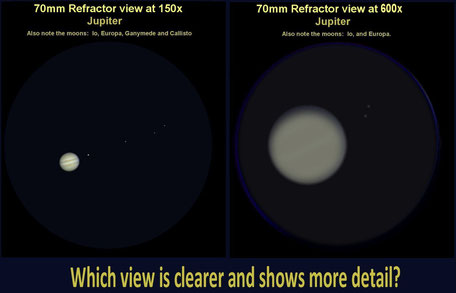
- 70 mm refractor → Jupiter was a small pale ball, no cloud bands really visible unless I used max magnification and then everything shook like crazy because I had the mount of a drunk toddler
- 130 mm reflector → suddenly I could see the Cassini Division in Saturn’s rings on a decent night and the Orion Nebula actually looked like a nebula instead of a smudge
- Current 8-inch (203 mm) Dob → holy crap I can see spiral arms in some galaxies on good nights and the Trapezium cluster in Orion is stupidly sharp
If you’re just starting, I’d say don’t go below 100–114 mm unless you literally only have a balcony and need something super portable. Check this buyer’s guide from Sky & Telescope for a solid sanity check: https://skyandtelescope.org/astronomy-equipment/how-to-choose-a-telescope/
Mounts: The Part I Hated Learning About
I spent way too much money on a computerized GoTo mount thinking it would fix my star-hopping skills. Nope. First night with it: aligned for 25 minutes, found Andromeda, pressed “slew to M31”… and it happily pointed itself at my neighbor’s roof because I forgot to level the damn thing.
These days I’m back to a simple Dobsonian base—push it, nudge it, done. No batteries, no motors whining, no $800 regret.
If you want tracking though (especially for photos), look at something like an equatorial mount or a solid alt-az with goto. Just know you’ll pay for convenience.
How strong should the lens on a telescope be to see the rings of …
Other Stuff That Actually Matters (Not the Marketing BS)
- Focal ratio — f/5–f/6 is great for wide views of nebulae, f/8+ is better for planets because you get more magnification without eyepiece swapping hell
- Eyepieces — the cheap ones that come in the box are usually trash. I replaced mine with a 32 mm Plössl and a 6 mm gold-line set and it felt like I bought a new telescope
- Collimation (for reflectors) — sounds scary, is annoying the first five times, then becomes a 90-second ritual. Get a Cheshire tool. Life changer.
- Portability — if you have to carry it more than 50 feet you’ll use it less. I learned that after hauling my first big scope up a gravel hill and almost crying.
Quick List of My Current Go-To Recommendations in 2026
- Absolute beginner on tight budget → Apertura AD8 or Orion SkyQuest XT8 (classic solid Dobs)
- Want something grab-and-go → Sky-Watcher Heritage 130P or 150P tabletop
- Serious planets + some deep sky → 6–8 inch SCT like Celestron NexStar Evolution 8
- Visual deep-sky obsession → 10-inch or bigger Dobsonian once you know you’re hooked
(Prices fluctuate like crazy so I’m not listing them—check High Point Scientific or Agena Astro for current deals.)
PLEASE DO NOT BUY ANY TELESCOPE UNTIL YOU READ THIS! – SuperCooper …
The Part Where I Admit I Still Suck Sometimes
Two weeks ago I tried photographing the Horsehead Nebula with my phone held up to the eyepiece. Results were… abstract art at best. But I saw the freaking Horsehead with my own eyes for the first time and almost dropped my coffee. That feeling? Worth every dollar and every mosquito bite.
So yeah—what makes a great telescope isn’t the fanciest gadget or the highest price tag. It’s the scope that actually gets you outside looking up instead of sitting inside reading forums about which one you “should” buy next.
Grab whatever reasonably big aperture thing fits your budget and your car trunk, drag it outside even when you’re tired, and point it at something bright first (Jupiter, Saturn, the Moon). You’ll figure out the rest while freezing your butt off under the stars like the rest of us weirdos.
Got a telescope already? Tell me what you’ve got and what you wish you knew when you bought it—I’m still learning too. Seriously. Drop it in the comments.
Clear skies (and please don’t shine your red flashlight in my eyes if we ever meet at a star party).