


Okay… here we go.
Future of space innovation has been living rent-free in my head since like… last Tuesday when I was lying on my disgusting couch in my apartment in Austin (yes I moved back to Texas, don’t judge me) eating cold pizza and doom-scrolling Starship test flight clips at 2:37 a.m.
I swear the glow from my phone was the only light in the room except for the sad blue flicker of my fish tank that hasn’t had a fish since 2023. Anyway.
Where We Actually Are Right Now in the Future of Space Innovation (January 2026 edition)
We’re not in the golden age of space anymore. We’re in the chaotic toddler phase of space. Everything is loud, expensive, breaks every other week, and someone (usually Elon) is yelling “Wheels up!” on X while the rest of us are just trying to figure out if the thing’s gonna blow up again.
- Starship has completed 8 full-duration orbital test flights (as of Jan 10, 2026)
- Two of them actually caught the booster. Like… with robot chopsticks. I cried a little the first time. Pathetic, I know.
- Artemis III is now officially delayed to no earlier than September 2027 (NASA finally admitted what everyone already knew)
- China just landed another sample-return mission from the far side and they’re not even bragging that hard anymore. That’s terrifying.
What’s Actually Coming Next (My Very Biased Guesses) Future of Space Innovation
Reusability Is Going From Cool Party Trick → Boring Normal
I used to get goosebumps every time Falcon 9 landed. Now I literally keep working while it happens in the background like it’s just another Tuesday. That’s the future of space innovation right there: when 100% reusability stops being sexy and just becomes infrastructure.
Next milestone I’m personally waiting for (and betting my dignity on): Starship catching the Super Heavy booster in flight → becomes routine by end of 2027 → launch cost per kg to LEO drops below $150 (maybe even $80–100 if they stop blowing up the launch tower every six months)

star trek voyager – Trekking with Dennis
We’re About to Get Real About Living (Not Just Visiting) on Mars Future of Space Innovation
Listen. I’m not saying we’re moving to Mars next year. I’m saying the conversation has permanently shifted from “if” to “when we inevitably have to figure out radiation shielding, oxygen production, and how not to slowly go insane in a tin can 225 million kilometers from therapy.”
Biggest near-term things I’m watching:
- First serious in-situ resource utilization (ISRU) demo on Mars (likely 2028–2030 window)
- Closed-loop life support systems that can run 2+ years without resupply (NASA + private money pouring in)
- The first person who’s gonna spend >500 consecutive days in a Mars simulation habitat here on Earth and probably lose their mind a little bit (I would last 17 days max)
The Slightly Embarrassing Personal Take Future of Space Innovation
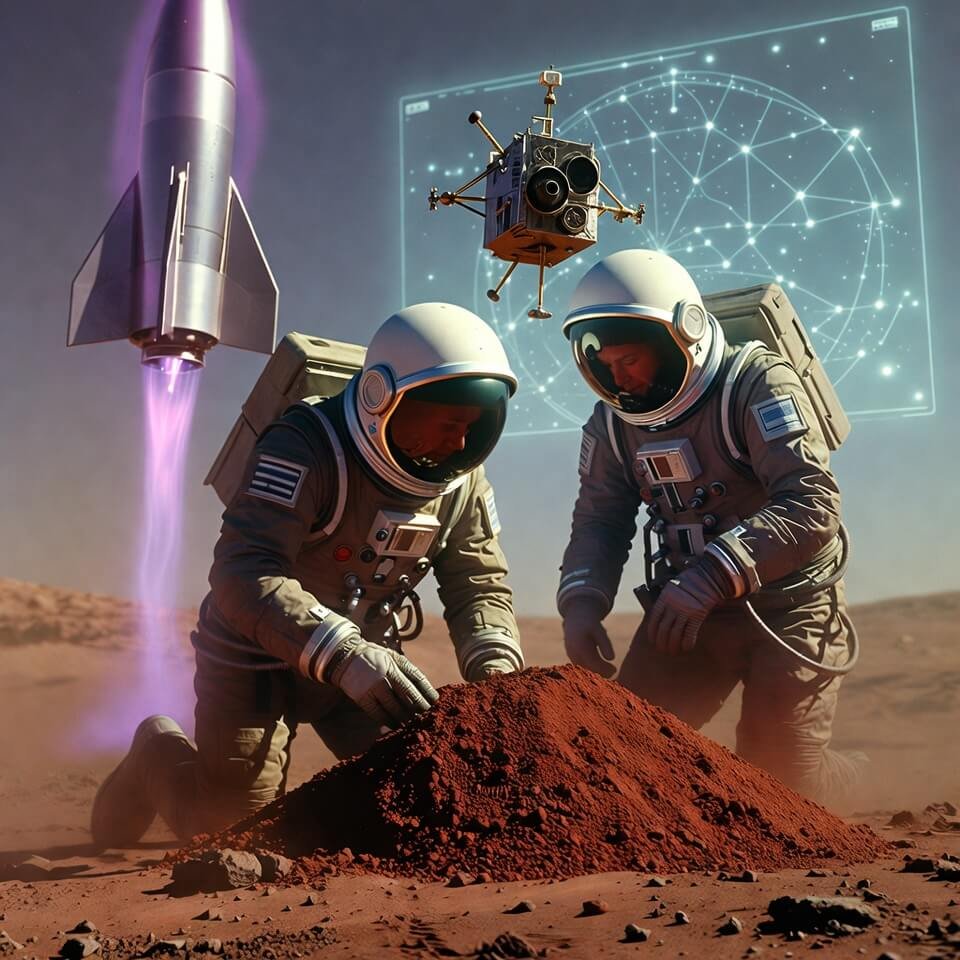
So last month I impulse-bought a $42 “Mars soil simulant” bag off some sketchy STEM education site because I wanted to feel closer to the dream, right? I opened it in my kitchen. It smelled like burnt drywall and broken dreams. I immediately regretted every life choice that led me to that moment.
And yet… I still stared at the reddish dust for like 20 minutes imagining footsteps on the real thing.
That’s where we’re at with the future of space innovation in 2026: half of it is extremely cool engineering, the other half is humans being painfully, beautifully, stupidly hopeful.

futurama point . fan fics . coldangel_1 . blame it to the brain …
Quick Outbound Links for Credibility (because I’m trying to be a grown-up blogger)
- Latest Starship IFT-8 recap & analysis → NASASpaceflight.com coverage
- Current Artemis timeline (yes it keeps moving) → NASA official Artemis page
- China’s most recent far-side sample return mission details → CNSA press release archive
- Excellent long-read about the psychology of long-duration spaceflight → The Atlantic – “The Coming Mars Isolation”
Anyway. I’m gonna go stare at the ceiling and think about how we’re simultaneously the most advanced species that’s ever existed and also still arguing about who gets to pay for the giant rocket fireworks.
What do you think is actually coming next in the future of space innovation? Drop it below. Roast me. Tell me I’m coping too hard. I can take it.







 about the future of space innovation right now—here’s my unfiltered messy thoughts)